Why Are Farmers in India Forced to Burn Crop Stubble?
Understanding the Real Challenges Behind Stubble Burning
Why Are Farmers in India Forced to Burn Crop Stubble?
Every winter, northern India witnesses a sharp rise in air pollution, and crop stubble burning is often identified as one of the contributing factors. While farmers are frequently blamed, the issue is far more complex. Stubble burning is not merely a choice—it is often driven by economic, logistical, and policy-related constraints.
Understanding the farmer’s perspective is essential to finding practical and sustainable solutions.
What Is Stubble Burning?
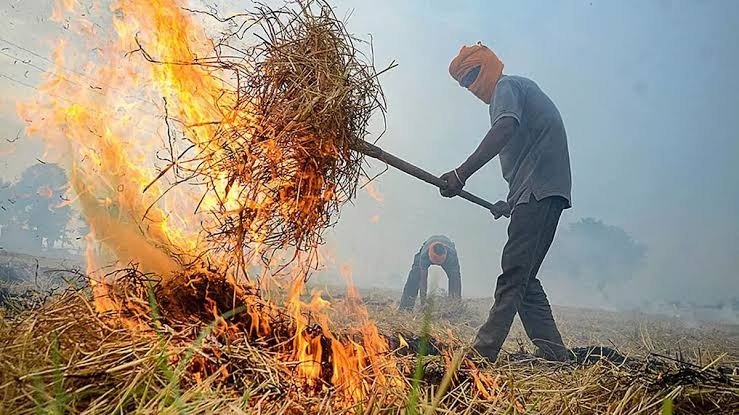
Stubble burning is the practice of setting fire to leftover crop residue after harvesting crops such as paddy. Farmers do this to quickly clear fields before sowing the next crop, usually wheat.
The interval between harvesting paddy and planting wheat is short, often only 15–20 days. Removing large amounts of straw manually or mechanically can be expensive and time-consuming.
Why Do Farmers Burn Stubble?
Several practical reasons contribute to the practice:
- Short gap between two crop seasons.
- High labour costs.
- Expensive residue management equipment.
- Lack of affordable alternatives.
- Limited custom hiring centres in many villages.
- Financial pressure on small and marginal farmers.
For many, burning remains the fastest and least expensive method to prepare fields for the next crop.
The Farmer’s Point of View
Most farmers do not wish to burn crop residue. They understand that it damages soil and contributes to pollution. However, many feel they have few practical options.
A farmer may ask:
- “If I don’t burn the residue, how do I prepare my field in time?”
- “Who will bear the extra expense?”
- “How can a small farmer afford expensive machinery?”
These are real concerns, especially for small landholders operating with limited financial resources.
Government Policies: Incentives and Penalties
The Government of India and several state governments have introduced subsidy schemes for crop residue management equipment such as Happy Seeders, Super Straw Management Systems, and balers.
These initiatives are intended to reduce open burning.
At the same time, authorities in some regions impose penalties on farmers who burn crop residue, as directed under environmental regulations and orders issued to address seasonal air pollution.
This has created a situation where some farmers feel they are being encouraged to adopt new technology while also facing enforcement actions when affordable or accessible alternatives are not available.
The Cost Barrier
Although machinery subsidies exist, challenges remain:
- Upfront investment can still be high.
- Small farmers often cannot justify purchasing specialized equipment.
- Availability of machines during peak season may be limited.
- Hiring services may not reach every village.
As a result, many farmers continue using the quickest available method.
Effects of Stubble Burning on Soil
Burning crop residue has several long-term consequences for agricultural land.
Loss of Organic Matter
Crop residue naturally adds organic carbon to the soil. Burning destroys this valuable resource.
Destruction of Beneficial Microorganisms
High temperatures kill earthworms and beneficial soil microbes that help maintain soil fertility.
Reduced Soil Fertility
Repeated burning gradually lowers nutrient availability and can reduce soil productivity over time.
Increased Fertilizer Requirement
With declining soil health, farmers may need higher fertilizer inputs to maintain yields.
Effects on the Environment
Stubble burning also has environmental impacts.
Air Pollution
Smoke releases particulate matter (PM2.5 and PM10) and other pollutants that can affect air quality.
Greenhouse Gas Emissions
Burning releases carbon dioxide and other gases that contribute to climate change.
Reduced Visibility
Dense smoke can reduce visibility, affecting transportation safety.
Public Health
Poor air quality may aggravate respiratory conditions, particularly among children, older adults, and individuals with existing respiratory illnesses.
Is the Farmer Alone Responsible?
Many agricultural experts argue that the issue should not be viewed solely as the responsibility of farmers.
Crop residue burning is influenced by multiple factors including:
- Agricultural policies
- Crop selection
- Market economics
- Machinery availability
- Supply chains for biomass utilization
- Infrastructure
- Time constraints
A long-term solution requires cooperation between governments, industry, researchers, and farming communities.
Sustainable Solutions
Several alternatives can help reduce stubble burning:
- Wider availability of residue management machinery.
- Affordable custom hiring centres.
- Better market opportunities for straw-based industries.
- Biomass power generation.
- Bio-CNG production.
- Pellet manufacturing.
- Composting.
- Cattle feed applications where suitable.
- Incentives linked to residue collection rather than burning.
Creating economic value from crop residue can reduce the need for burning.
Conclusion
Stubble burning is a complex agricultural challenge rather than simply an environmental issue. Farmers operate under tight planting schedules, financial constraints, and practical limitations.
While reducing crop residue burning is an important environmental goal, lasting solutions should combine effective policy implementation, accessible technology, financial support, and viable economic uses for agricultural residue.
Understanding the realities faced by farmers is an important step toward developing sustainable and practical solutions that benefit agriculture, the environment, and society.